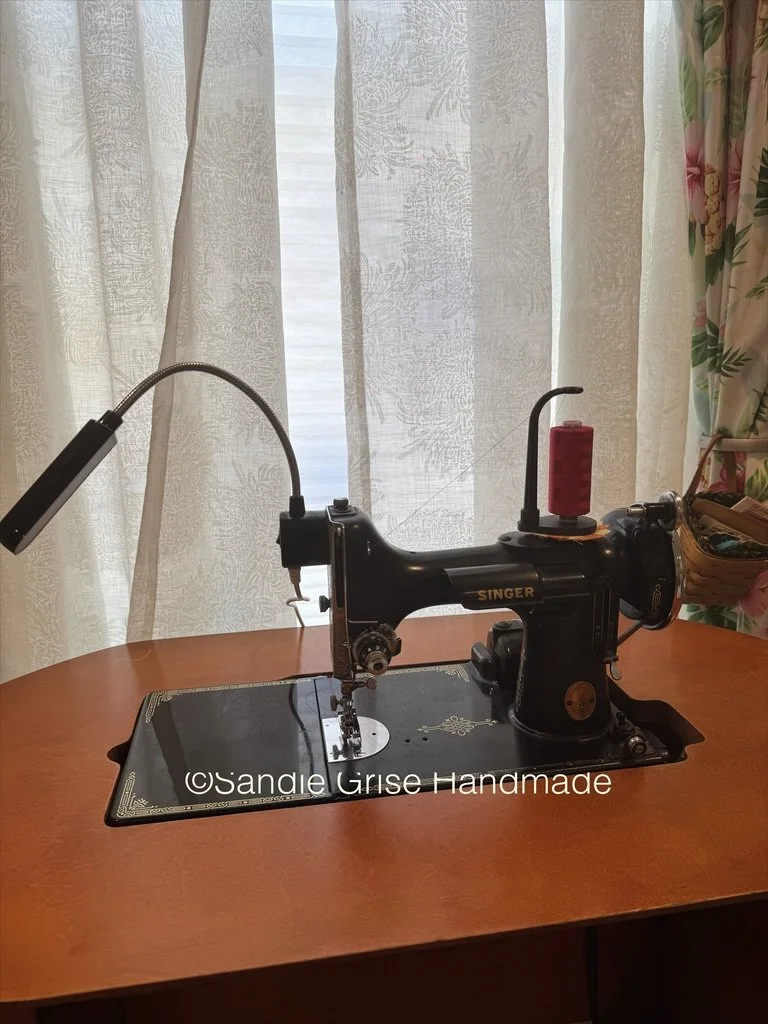
multiple sewing machines
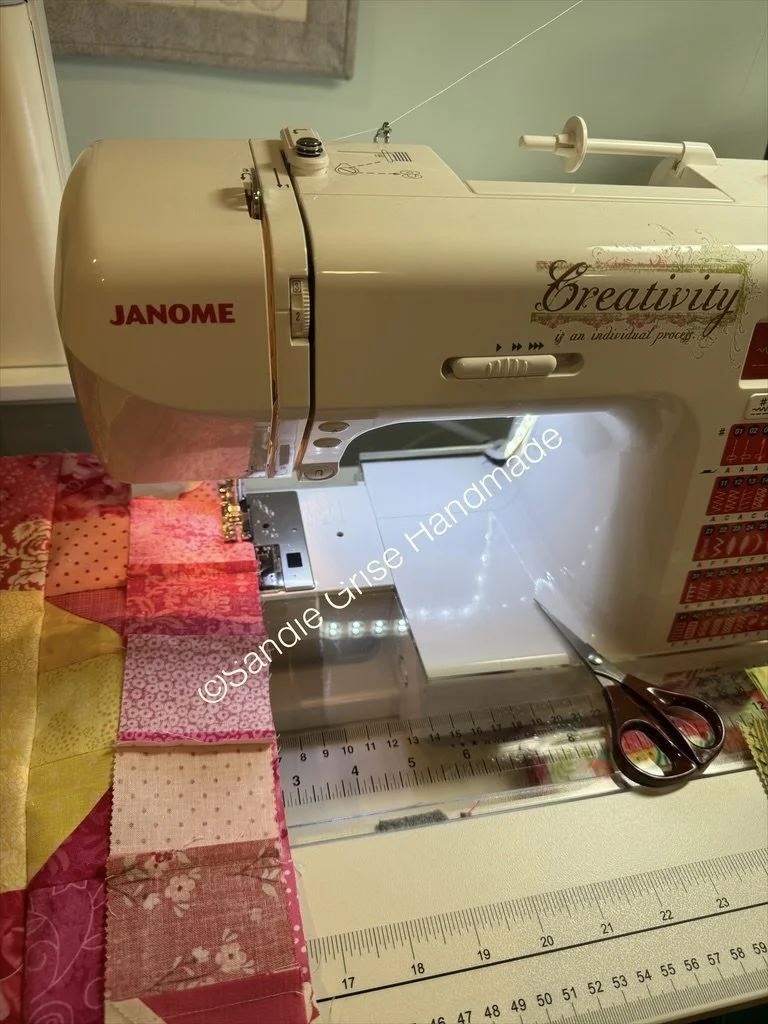
Not all sewists and quilters have more than one sewing machine, but there is a simple rule that we follow: if you, like me, work with multiple sewing machines, use the same machine for the entire process of piecing your quilt or sewing your garments.
Switching machines midstream can lead to issues later on, with seams or hems not matching up correctly.
There's the needle: if you have to replace it, ensure it's the same size and manufacturer as the one you're replacing.
There's also the thread: work with the same spool of thread for your bobbin and top thread. If you're working with more than one color of thread, ensure it's the same brand and thread weight, as that too can make a difference in your seams. Not all thread brands are made the same way, and just because it says it's a 50 thread weight does not mean that you can switch mid-project from using Aurifil or Elfina thread to Gütermann or Connecting Threads brand thread. You’d be surprised at how differently each of those threads feel when pulled through your fingers. The thickness of each is surprisingly different.
I have projects set aside for each of my sewing machines; each specific machine is set up with the thread that works best in it.
Next, you'll ask, "Why have more than one sewing machine?"
For me, it was a natural process. My first sewing machine was a surprise gift from my husband in 1990, a White 1510. I sewed many projects on that wonderful machine until it died in 2008. It was then that I bought my first Janome, the one you see at the top of this post. Then I bought my Janome Jem Gold, a 3/4-sized machine perfect for taking to classes. It's a basic machine, and I used it while we lived in England, as it had no computerized parts to fry on the British alternating hertz power system.
In 2018, I was on the hunt for a heavy-duty sewing machine with a deeper throat space for quilting, and that's when I purchased my Janome 6500P. Each machine has its strengths, and I love them all dearly.
It wasn't until our move down south in 2021 that I felt the pull to vintage and antique sewing machines and their cabinets. I blame those shop hops! So many of the quilt shops had vintage and antique sewing machines on display, and all of them showcased beautifully in vintage cabinets, which made me want to have my own connection to the past like that. In 2023, I had started looking for a straight-stitch-only machine, something to use exclusively for my quilting projects, and it was in January 2024 that I acquired my Singer Featherweight-Clementine. It was instant love at first sight. I have acquired a few more vintage Singer sewing machines, and like my Janome sewing machines, they all have a purpose, and they all have their own strengths.